

Engineering Rigor Into Every High-Stakes Decision

Pharma has outgrown linear pipelines. Nearly 90% of trials still fail, not for lack of science, but because decisions cannot keep pace with complexity. Evidence now evolves in motion, choices compound across functions, and rigor must extend beyond experiments into how decisions are framed, tested, and scaled.

Mu Sigma operates at the same level of discipline as the industry, building systems that convert uncertainty into advantage across discovery, development, and real-world evidence.

Pharma Industry Perspective

We formalize scientific intent before analysis begins. Ontologies and knowledge graphs encode domain logic with precision, removing ambiguity from endpoints, signals, and assumptions so reasoning remains consistent across assets, teams, and therapeutic areas.

Akashic Architecture preserves the relationships between questions, evidence, and methods as programs evolve. Teams move from exploration to execution without losing scientific nuance, even as data sources expand and regulatory expectations shift.

Coordinated AI agents plan, validate, and execute analytical workflows under explicit quality controls. Outputs remain explainable, traceable, and inspection-ready, matching the standards expected in clinical, regulatory, and safety environments.

Why Mu Sigma for Pharma & Biotech?

Pharma 1 Why
Scientific Rigor Where Decisions Are Made

Pharma lives on precision, reproducibility, and traceable logic. Our Art of Problem Solving frameworks apply the same discipline used in protocol design and statistical analysis to decision design itself. Every model, workflow, and recommendation is built to stand up to regulatory review and scientific challenge.

Pharma 2 Why
Semantics Before Scale

AI fails when meaning breaks. We build ontologies, knowledge graphs, and question networks that encode scientific intent directly into systems. Shared definitions and explicit relationships create consistency across assets, trials, therapeutic areas, and teams, eliminating ambiguity before it turns into risk.

Pharma 3 Why
Automation Without Compromise

High-stakes environments demand more than speed. Our agentic systems plan, validate, and execute analytical logic through coordinated AI roles with embedded quality checks. Outputs remain explainable, auditable, and inspection-ready across clinical development, real-world evidence, safety, and regulatory workflows.

Pharma 4 Why
Built to Explore, Not Just Execute

Execution optimizes what is known. Exploration prepares for what changes. We design environments where teams can test hypotheses quickly, respond when evidence shifts, and build strategic optionality into portfolios. That capability shortens feedback loops and strengthens decisions across research and development.

Pharma 5 Why
Learning at Enterprise Scale

Complexity compounds when learning does not. Our Continuous Service as a Software model fuses expert judgment, scalable platforms, and feedback-driven systems into a single operating engine. Teams ask better questions, reduce noise, reuse knowledge, and lower the cost of insight across programs.

CASE STUDIES

Real Outcomes,
Proven Results

Pharma Case study 1

From Manual Mapping to Machine-Speed Discovery

A Fortune 500 pharma company replaced weeks of manual clinical concept mapping with automated, standards-aligned workflows. Mu Sigma compressed cohort creation from months to minutes, cutting error risk while unlocking scalable reuse across R&D programs.

95%

reduction in concept set creation time

240 hr

45 minutes per cohort

10x+

scalability across clinical phenotypes

Pharma Case study 2

Global R&D Without Language Friction

Mu Sigma enabled cross-language scientific discovery by automating Key Opinion Leader identification across English and Japanese literature. AI-driven semantic search eliminated translation bottlenecks, accelerating insight flow and expanding global research reach.

17%

increase in identified Key Opinion Leaders

70%+

reduction in manual search effort

Pharma Case study 3

Faster Vaccine Decisions, Backed by Evidence

To accelerate RSV vaccine approval, Mu Sigma applied prescriptive modeling to refine cohorts, surface hidden risk factors, and optimize trial execution. The result was faster insights, stronger evidence, and reduced time to regulatory confidence.

12%

expansion in eligible patient cohorts

50%

faster insight generation

300+

high-density trial sites identified

Precision. Predictability. Preparedness. Engineered for Pharma.

The drug development pipeline is a hyper connected environment where scientific choices, operational constraints, and commercial pressures collide. Mu Sigma provides a semantic foundation supported by ontologies, knowledge graphs, and question networks so every decision point is grounded in logic that can scale. Our agentic AI systems accelerate planning, analysis, and execution across R&D and real world research, giving pharma teams a way to reason clearly in environments that evolve faster than traditional models can handle.

Below are our core capabilities across the drug development life cycle.

Identify Disease Gaps Using Real-world Evidence

Understanding the true burden of disease is critical to shaping the future of healthcare solutions. Mu Sigma helps pharma companies assess disease prevalence, patient demographics, and healthcare utilization patterns to uncover gaps in treatment. By harnessing real-world evidence (RWE), we provide precise, data-driven insights into patient experiences, conditions, and care gaps, ensuring that research and development efforts are aligned with the most pressing healthcare challenges.
How We Help

  • Identify unmet medical needs and optimize drug development pipelines.
  • Generate deep patient insights to personalize treatment strategies.
  • Use predictive analytics to forecast disease progression and intervention impact.
AI-Driven Endpoints for Faster Approvals

Traditional clinical endpoints often fail to capture the full spectrum of patient responses to treatment. Mu Sigma integrates multimodal data, including genomics, imaging, and digital biomarkers, to discover novel and exploratory endpoints. Our AI-driven analytics uncover patterns in fragmented, unstructured data, enabling the identification of predictive and prognostic markers that accelerate regulatory approval and improve patient stratification.

How We Help

  • Develop AI-powered models to validate new clinical endpoints.
  • Enable faster, data-driven decision-making in drug development.
  • Improve patient stratification and optimize inclusion criteria.
Smarter Protocols Through Disease Modeling

A deep understanding of disease progression is crucial for optimizing trial design and accelerating patient recruitment. Mu Sigma builds digital twin models that simulate disease evolution, enabling pharma companies to refine study protocols, optimize control groups, and reduce sample size requirements. Our advanced analytics help predict treatment outcomes, ensuring that clinical trials are designed for maximum efficiency and impact.

How We Help

  • Develop disease progression models to improve patient selection.
  • Reduce control arm sample size through predictive modeling.
  • Simulate treatment responses using real-world data.
Outperform Trial Benchmarks with Predictive Insights

Pharmaceutical companies need data-driven insights to design trials that outperform industry benchmarks. Mu Sigma automates the analysis of global trial landscapes, helping organizations assess study feasibility, optimize protocol designs, and gain a competitive edge. Our statistical models generate real-time benchmarking data, reducing the reliance on slow, manual processes.

How We Help

  • Automate identification of benchmark studies for strategic trial planning.
  • Enable study feasibility analysis through competitive intelligence.
  • Provide real-time insights to adapt trial strategies dynamically.
AI-powered Targeting for Diverse Enrollment

Recruiting the right patients is one of the biggest bottlenecks in clinical trials. Mu Sigma leverages AI-powered patient journey mapping and real-world data integration to identify, engage, and retain trial participants effectively. Our solutions reduce drop-off rates and improve screening outcomes, ensuring faster enrollment while maintaining patient diversity.

How We Help

  • Identify and engage the right patient populations with precision targeting.
  • Enhance patient screening outcomes with AI-driven predictive models.
  • Reduce drop-off rates and accelerate enrollment timelines.
Faster Site Identification with Federated Data

Selecting the right clinical trial sites is critical for reducing delays and improving data quality. Mu Sigma combines federated learning with AI-driven insights to evaluate investigator performance, site feasibility, and geographic patient distribution, ensuring optimal site selection.

How We Help

  • Accelerate trial startups by identifying high-performing sites.
  • Reduce default rates through precision site matching.
  • Optimize site portfolio for cost and efficiency.
Simulate Trial Portfolios for Better Returns

Clinical trial portfolios must be continuously optimized to maximize efficiency. Mu Sigma’s AI-driven simulation engines model different trial scenarios, helping pharma companies identify bottlenecks, allocate resources effectively, and adapt strategies based on real-time data.

How We Help

  • Provide a centralized cockpit for monitoring portfolio evolution.
  • Run “what-if” simulations to enhance decision-making.
  • Optimize capacity utilization across multiple trials.
Real-Time Risk Monitoring Across Sites

Ensuring data integrity and compliance across multiple trial platforms is a complex challenge. Mu Sigma’s centralized data monitoring solutions streamline workflows, improve site engagement, and enable proactive risk mitigation through anomaly detection.

How We Help

  • Enhance real-time trial oversight and site monitoring.
  • Improve regulatory compliance and data integrity.
  • Reduce site workload through AI-driven automation.
Ensuring Pharmacovigilance

Patient safety remains the cornerstone of clinical trials. Mu Sigma employs AI-powered analytics to detect adverse event patterns, optimize lab testing protocols, and prioritize patient monitoring based on historical disease associations.

How We Help

  • Redesign clinical trials based on disease-adverse event relationships.
  • Prioritize lab visits based on patient risk assessment.
  • Optimize pharmacovigilance strategies for improved safety.
RESOURCES

Explore More Insights

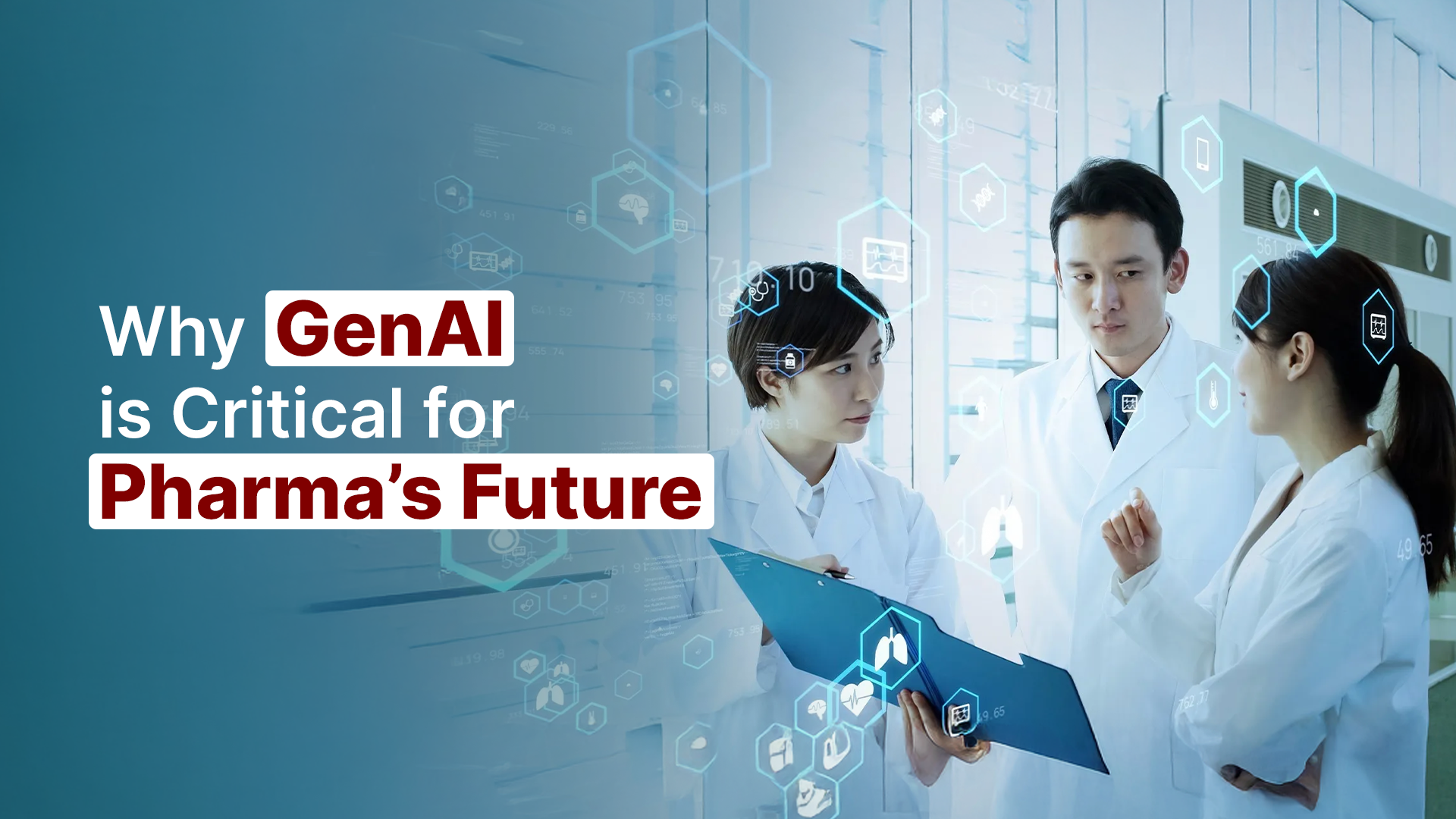
Why GenAI is Critical for Pharma’s Future

Imagine a scenario where an AI model, trained on incomplete or inaccurate data, misguid...
Harnessing Agentic AI in Pharma RWE and HEOR

As the race to develop new drugs intensifies, the ability to swiftly and accurately ana...

Pharma’s Value Chain Disrupted Can the Industry Adapt to the IRA

The Inflation Reduction Act (IRA) represents a significant transformation within the US...

Casestudy Thumbnails Accurate and Expanded Patient Cohorts to Accelerate RSV Vaccine Development 2 91

Expediting Pre-Market Approval for RSV Vaccine with Data-Driven Patient Cohort Expansion

Casestudy Thumbnails Building Resilient Supply Chains Amid Pandemic Chaos 2

Building Resilient Supply Chains with Advanced Simulation and Modeling

Website casestudy 684x383 Ulcerative Colitis Severity Assessment Powered by Vision Models

Mu Sigma Elevates Safety Monitoring with AI-Based Patient Risk Classification

Website Casestudy A Data Driven Cure for Production Bottleneck 684x383

Slashed Backorders by 50% with Smart Automation

R delivers regulatory-ready speed, savings, and science. This whitepaper shows how pharmaceutical teams move from SAS to R for Real-World Data anal...
Mu Sigma’s Continuous Service as a Software (CSaaS) is designed to help businesses break free from rigid execution models and embrace industrialize...
Mu Sigma’s Business Exploration Ecosystem is designed to help companies break free from rigid execution models and embrace industrialized explorati...
Doyne thumbnail
Doyne Farmer is a complex systems scientist interested in chaos theory, complexity, and econophysics. His research focuses on economics, including ...
Jenny thumbnail
Dr. Jenny Kehl is a political economist at Global Studies and Freshwater Sciences and the Global Water Security Scholar for the University of Wisco...
sanjeev Thumbnail
Sanjeev Sanyal is currently a member of the Economic Advisory Council of the Prime Minister, and Secretary to Government of India. Sanjeev was name...
CONNECT WITH US