Datafication for Digital Transformation
- Read Time: 5 Min
-


Global enterprises will pour $3.88 trillion into digital transformation by 2028. Yet, most of this capital is entirely wasted on surface-level modernization. We are generating 527 zettabytes of data, but scale doesn’t create enterprise value.
The real constraint holding back your organization is not a lack of technology or cloud storage but the absence of operational discipline. It is the absence of datafication.
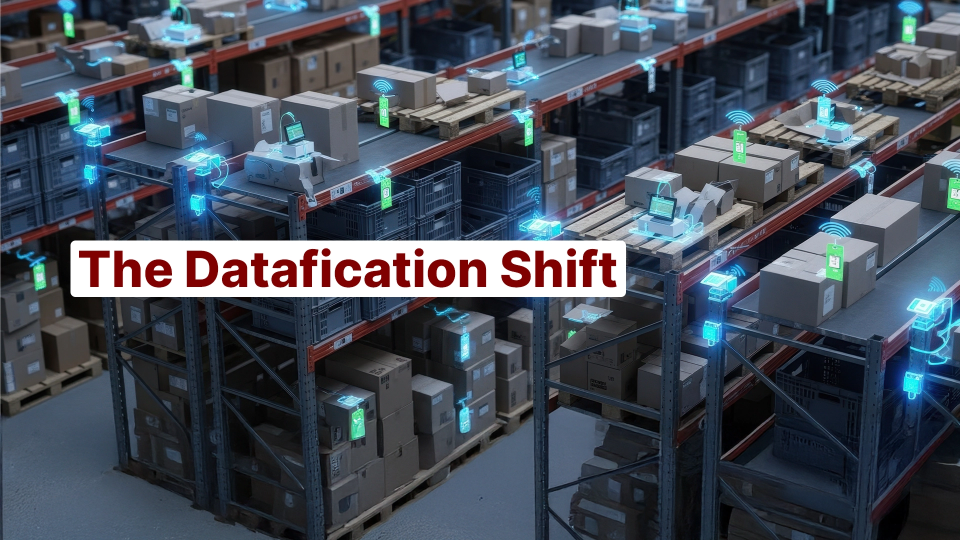
Datafication is the discipline of converting every business activity, customer interaction, and operational exhaust into a structured mathematical asset that dictates your workflows. Without it, your “digital transformation” is just an expensive IT facelift. With it, you fundamentally rewire how the business makes money.
As a C-suite executive, you do not need another passive dashboard to look at. You need a competitive advantage. That begins by completely rethinking how your organization captures operational telemetry and translates it into frictionless execution.
What Is Datafication, and How Does It Differ from Digitalization?
Digitization is basic housekeeping: converting paper invoices into PDFs or moving physical records to the cloud. Digitalization turns a manual onboarding process into a mobile app to cut operational friction.
Datafication is the actual engine. It actively captures the granular exhaust from every single touchpoint and weaponizes it for decision-making at scale. It stops treating data as a byproduct and starts treating operational signals as your most valuable enterprise asset.
Consider the distinction:
| Concept | Primary Focus | Outcome |
| Digitization | Converting analog to digital | Accessibility |
| Digitalization | Automating and redesigning workflows | Efficiency |
| Datafication | Turning interactions and processes into structured, analyzable data | Decision intelligence |
Digital transformation without datafication simply enables faster decision-making. These can be right or wrong. Datafication improves your actual direction. When you hardwire this discipline into your operating model, you stop reporting on history and start engineering the future. Datafication reduces the probablity of wrong decisions.
Uncovering the Impact of Datafication
The theoretical promise of datafication means nothing until it hits the P&L. Here is where the math is currently separating the winners from the legacy losers.
Supply Chain Optimization
Your supply chain is bleeding margin because signals across procurement, logistics, and retail endpoints are disconnected. Datafication physically fuses these fragmented signals into a single, aggressive control tower.
When this telemetry is structured and connected, the enterprise stops guessing:
- You spot localized demand shifts weeks before they hit the quarterly forecast.
- You identify and kill logistical bottlenecks before they completely disrupt operations.
- You dynamically adjust inventory buffers based on live risk signals, not historical averages.
For global manufacturers, this eliminates dead capital tied up in stockouts and ensures reliable service. You stop reacting to supply shocks, and start anticipating them and acting first.
Personalized Content
Broad demographic targeting is dead. In retail and media, precision is revenue-critical.
Datafication captures behavioral data across browsing patterns, dwell time, and transaction history. This data feeds recommendation systems. And those recommendation systems refine targeting in real time.
The difference comes down to detail. Instead of making decisions based on broad customer segments, datafication allows you to understand behavior at an individual level. That sharper view leads to more relevant interactions, stronger engagement, and a clear improvement in conversion rates.
For leadership teams, marketing becomes intelligence-driven and not campaign-driven.
Smart Tire Management
A commercial tire is no longer just rubber; it is a live data node. Sensors continuously stream pressure, temperature, and wear data directly back to the fleet operator.
With datafication, this steady stream of information turns into predictive insights.
Fleet operators can:
- Spot safety risks before a tire fails.
- Plan tire rotations at the right time.
- Cut fuel waste caused by incorrect pressure.
What used to be a reactive maintenance cost is now a predictive, cost-slashing weapon.
Risk Assessment in Motor Insurance
Underwriting based on historical claims and zip codes is essentially a financial autopsy. Datafication changes the entire risk equation.
Telematics devices capture the ground truth of how people actually drive: hard braking, cornering speeds, and late-night mileage. This continuous real-world telemetry sharpens risk models down to the individual driver.
For insurers, the financial impact is immediate:
- Surgical precision in premium pricing.
- The elimination of unexpected, massive swings in claims payouts.
- An algorithmic capability to hunt down fraud.
Motor insurance abandons broad assumptions and moves to pure behavior-based assessment.
Education Evolution
Education and corporate training are finally being held accountable to actual ROI. Digital learning platforms now record participation, hesitation, and engagement metrics at the keystroke level.
Institutions use this telemetry to identify drop-out risks weeks before a student actually fails. For enterprise L&D, it means you stop funding useless seminars and build training models tied directly to measurable performance outcomes.
Across every sector, the mandate remains the same: convert your operational exhaust into structural insight.
Core Components of a Datafication Strategy
Datafication cannot scale on a broken architecture. You must mandate three foundational pillars:
Unified Architecture: Your infrastructure must ingest both structured CRM data and unstructured market exhaust simultaneously. Cloud-native pipelines are non-negotiable for real-time telemetry.
Ruthless Governance: f you fail to establish clear ownership and traceable data lineage upfront, datafication will simply amplify your existing organizational chaos. The insights you generate must physically trigger an action inside your actual workflows.
Embedded Execution: Data must physically feed into your workflows. Datafication only impacts the P&L when the algorithmic outputs plug directly into your pricing engines, supply chain routers, and risk models.
When these components lock together, transformation stops being an IT project and becomes your core operating model.
Step-by-Step Roadmap for Enterprises
A structured deployment prevents datafication from dissolving into a massive, abstract ambition. Execute in phases:
Isolate the P&L Impact: Target only the specific operational decisions where moving faster will directly expand your margin or mitigate a known risk.
Audit the Exhaust: Map the internal and external signals required to inform those specific decisions. Identify your blind spots.
Build the Pipes: Invest capital in ingestion and transformation infrastructure that can actually handle the scale of the telemetry.
Deploy the Math: Build predictive models that strictly align with your enterprise KPIs.
Wire it In: Integrate these insights directly into the operational systems. Kill the standalone reporting dashboard.
Force the Feedback Loop: Track the actual business outcome, feed it back into the algorithm, and recalibrate the model.
The sequence above guarantees that your investment is tied to hard financial impact, not isolated science experiments.
Challenges, Risks, and How to Address Them
Transformation is not frictionless. Datafication will immediately expose the operational cracks in your business.
The Silo Problem: Your legacy systems are currently hoarding data, and leadership must mandate shared standards across every business unit.
The Human Friction: Your veteran operators will fight this because they trust their gut more than an algorithm. Overcoming that friction requires transparent models that actually explain their math, backed by absolute, top-down executive sponsorship.
The Privacy Mandate: When you start capturing granular behavioral data, the regulators will be watching. Privacy must be engineered into the foundation.
Algorithmic Decay: Markets shift, and models degrade. If you do not have a continuous monitoring framework, your AI will confidently make terrible decisions.
The hardest barrier is the organizational chart. Datafication requires absolute alignment between data scientists, domain experts, and the C-suite.
FAQs
-
How is datafication different from digitization and digitalization?
Digitization converts physical information into digital form. Digitalization uses digital tools to automate processes. Datafication goes further by capturing structured data from everyday activities and using it to guide decisions, making digital transformation measurable and scalable.
-
How does datafication create business value?
Datafication creates business value by improving the accuracy of decisions. It reduces guesswork in pricing, supply chain planning, risk assessment, and customer targeting. When decisions become more reliable, margins improve, risk exposure declines, and growth becomes more predictable.
-
What role does data play in digital transformation?
Data is the operating system of digital transformation. Technology platforms provide capability, but data determines effectiveness. Without structured, governed data flows, transformation initiatives struggle to produce sustained returns.
-
Which industries benefit most from datafication?
Industries that handle large volumes of transactions and complex operations gain the most. This includes financial services, manufacturing, retail, insurance, logistics, and healthcare. That said, any enterprise looking to improve decision quality can benefit from a structured datafication approach.
-
What is the first step to start a datafication initiative?
The first step is to identify the decisions that have the biggest impact on revenue or risk. Then build a focused data strategy framework around those specific areas.
Related Articles