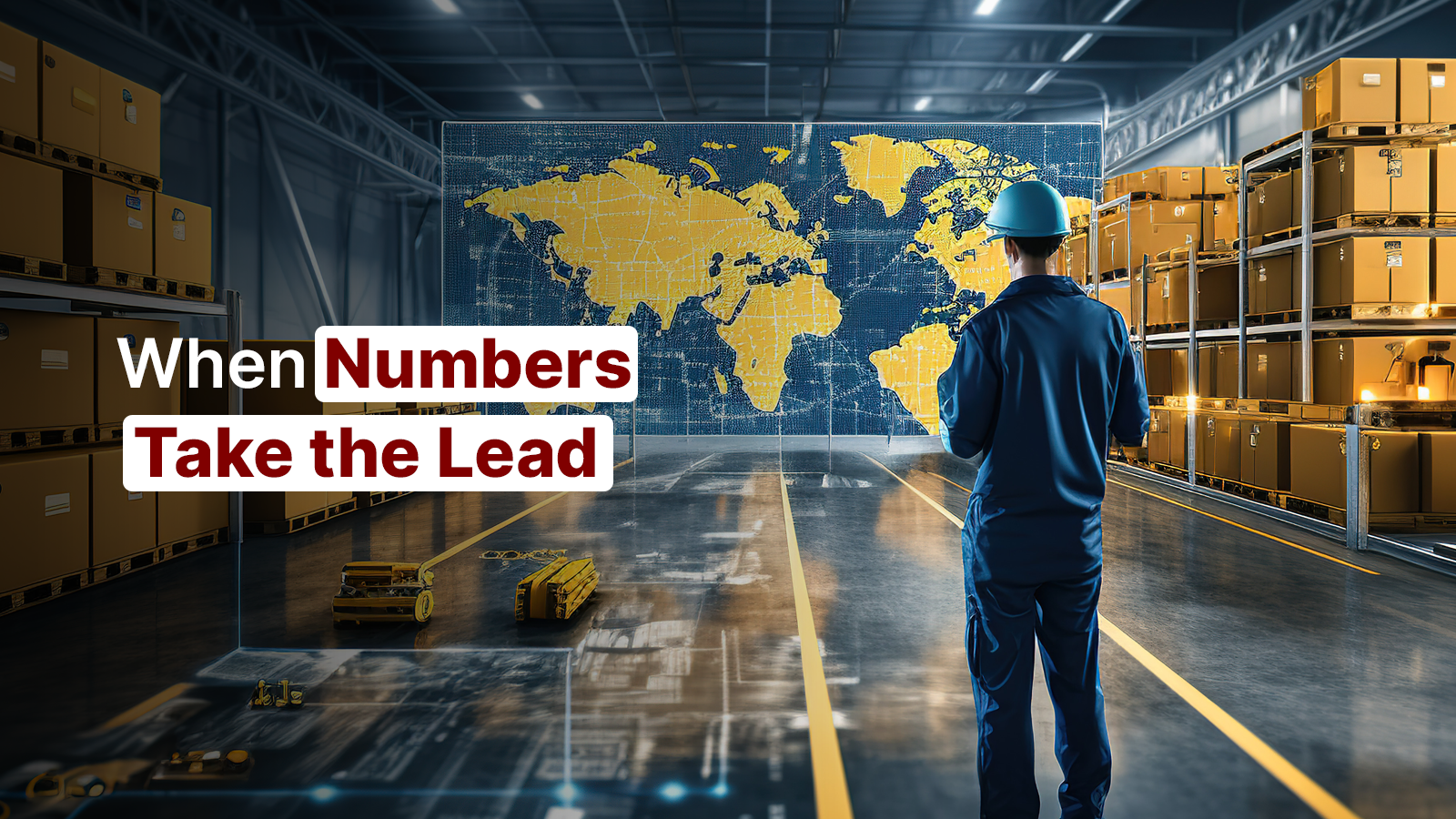
AI is Rewriting Inventory Management
- By Todd Wandtke
- Read Time: 5 Min
-


For decades, inventory management has been a balancing act—predicting demand, preventing overstock, and keeping supply chains from buckling under uncertainty. Companies built vast ERP systems, integrated forecasting models, and spent billions to keep inventory flowing smoothly.
However, a new wave of artificial intelligence (AI) intelligence (AI) is transforming the backbone of modern commerce. AI is turning inventory from a static resource into a living, thinking system.
The shift is fundamental and is rapidly becoming a standard among large multinational companies, driven by the need for efficiency and competitiveness. Companies like Walmart have adopted AI and machine learning to enhance inventory management and supply chains optimization. Widespread adoption underscores the necessity for businesses to integrate AI into their operations to maintain a competitive edge.
Where traditional inventory management relies on rigid processes, AI is dynamic. It can anticipate, adapt, and execute without waiting for human intervention. In the case of inventory management, AI can predict demand, inform products and raw materials movements between locations or stores, and help maximize profits with every unit in inventory.
The Looming Inventory Management Crisis
Global inventory networks have outgrown the systems built to manage them.
Retailers, manufacturers, and logistics giants are juggling supply chains that span thousands of suppliers and distribution hubs worldwide. Omnichannel fulfillment—once an emerging trend—is now the cost of entry. Customers expect inventory to be visible, available, and delivered quickly.
The problem is that most companies are still relying on models that:
- Depend on outdated forecasting techniques: Seasonal trends and historical sales data no longer cut it. Demand shifts in real-time, and inventory needs to move just as fast.
- Fail to provide true multi-enterprise visibility: Inventory isn’t siloed. It’s shared between partners, suppliers, and third-party logistics providers. A miscalculation anywhere in the chain ripples outward.
- Are slow to adapt when supply chains break down: Unexpected disruptions like geopolitical shifts, extreme weather, or supplier failures can leave warehouses overflowing with inventory no one needs, or worse, leave shelves empty when demand spikes.
The Rise of Inventory Management with AI
AI is rewriting the rules of inventory control. It analyzes supply and demand patterns, moves stock before shortages occur, and self-corrects imbalances—all without waiting for human input.
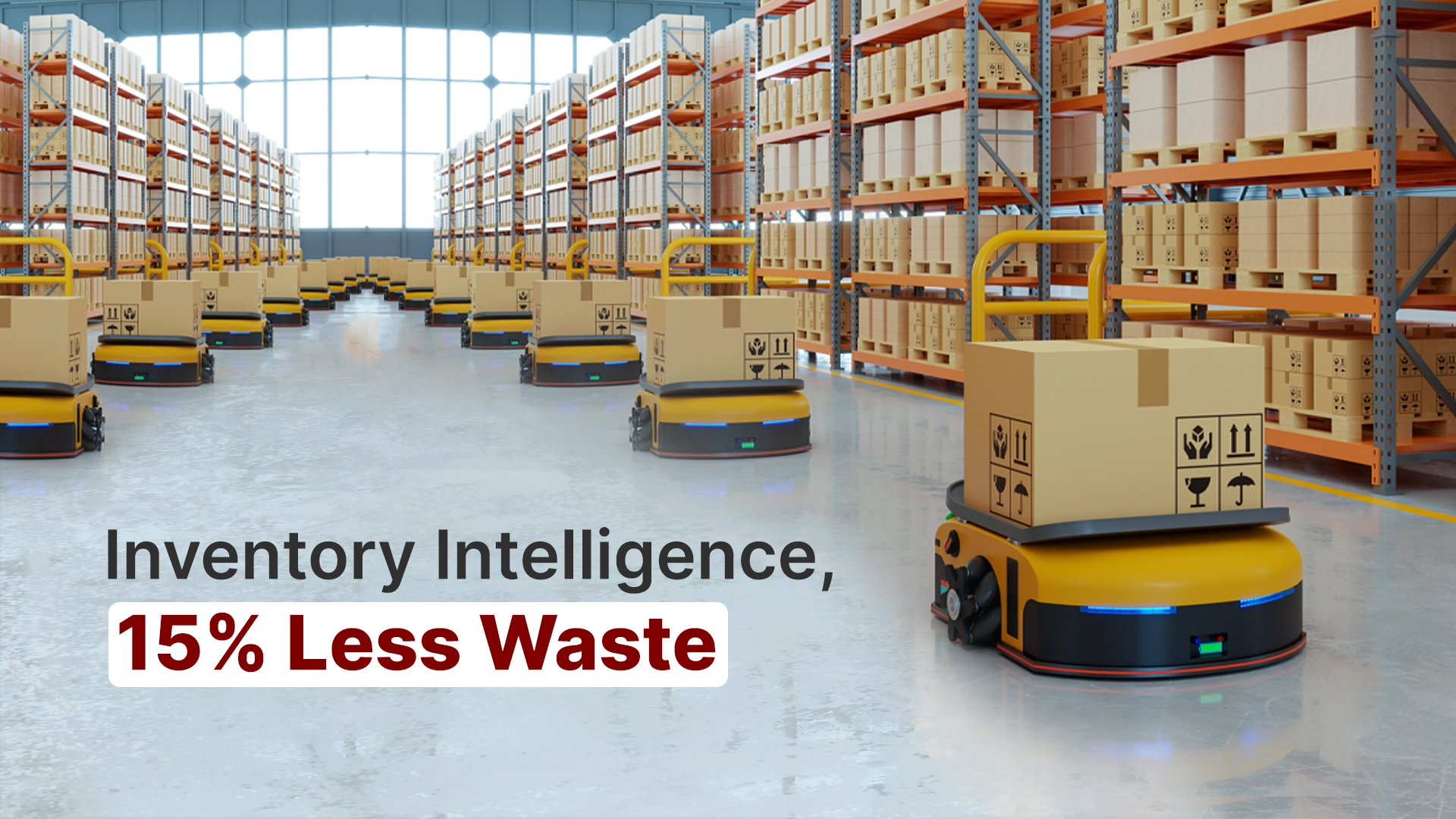
Companies are increasingly integrating AI into their inventory management strategies. Amazon has deployed over 750,000 mobile robots and tens of thousands of robotic arms across its warehouses, enhancing efficiency and reducing costs.
“Automation has led to a 25% reduction in order fulfillment costs and is projected to save the company $10 billion annually by 2030.”
Similarly, Ford’s AI-driven approach to inventory management and parts procurement has notably enhanced manufacturing efficiency and reduced costs. These examples underscore the transformative impact of AIk on inventory management within large corporations.
In a large warehouse, the inclusion of AI can yield several benefits, including,
- AI-driven demand forecasting that never stops learning. Inventory isn’t planned in quarterly cycles—it’s recalculated by the second. AI continuously refines demand predictions using real-time sales data, market conditions, customer behaviors, production data, and procurement data.
- Self-balancing stock levels across the entire supply chains. Inventory automatically shifts between distribution centers, retail locations, and warehouses based on anticipated demand, eliminating excess stock and reducing storage costs.
- AI-powered anomaly detection catching errors before they happen. Machine learning agents scan for irregularities—like a sudden dip in supplier fulfillment rates or an unexpected surge in returns—and intervene before they impact operations.
It’s the difference between reacting to problems and preventing them from happening in the first place.
“AI can simulate thousands of supply chains scenarios in advance, identifying vulnerabilities and preemptively adjusting inventory strategies.”
Where AI is Already Changing the Game
Predictive Replenishment
Traditionally, inventory forecasting has been a guessing game, even at the enterprise level. AI is ending that.
AI can recalculate replenishment needs in real-time, adjusting orders based on microtrends that human planners would never catch.
Real-Time Inventory Visibility
No more discrepancies between what’s on the shelf and what’s in the system.
AI syncs inventory data across suppliers, warehouses, and last-mile fulfillment centers in real-time. The system knows exactly where every unit is, whether it’s in a factory in China, a cargo ship in the Pacific, or a retailer’s backroom in Chicago.
The AI reroutes shipments mid-transit if demand shifts unexpectedly. It prevents over-promising inventory that doesn’t exist.
It results in reduced lost sales, higher customer satisfaction, and a supply chains that actually works in real-time.
Smarter, AI-Driven Supplier Management
For most enterprises, managing supplier performance is a mix of contractual agreements and gut instinct. AI is replacing guesswork with precision.
AI can monitor supplier lead times, reliability, and pricing trends—automatically selecting the best sourcing strategy for every order.
AI-Powered Risk Mitigation
A port closure in Asia. A raw material shortage in Europe. A sudden geopolitical shift.
In the past, supply chains disruptions meant scrambling for solutions after the fact. AI can simulate thousands of supply chains scenarios in advance, identifying vulnerabilities and preemptively adjusting inventory strategies.
Scenario-Driven Inventory Simulation
Simulating thousands of what-if scenarios (from supplier shutdowns in Shenzhen to flash sales in Seattle) with AI helps companies proactively optimize safety stock, reroute shipments, and align procurement strategies before disruptions ever occur.
This is the evolution from inventory planning to inventory war-gaming, a continuous cycle of anticipation and adjustment.
Demand Chain Interconnection
AI links inventory management to the demand chain including customer sentiment, marketing campaigns, pricing changes, and macroeconomic signals. It can help build a system where a spike in social media buzz prompts an automatic uptick in raw material orders or where a price drop triggers a reallocation of stock to high-conversion zones.
This tight interlinking turns the demand chain into a living nervous system, transmitting real-time signals directly to warehouses, factories, and fulfillment centers.
AI-Led Orchestration Across Functions
Procurement, logistics, and sales need no longer operate in silos and instead receive unified, AI-generated recommendations that balance demand signals with supplier constraints, inventory goals, and customer service levels.
Companies Can’t Afford to Wait
The financial benefits of AI integration in inventory management are substantial. A survey revealed that 70% of CEOs reported significant returns on investment from implementing AI solutions in their supply chains. These returns are attributed to improved accuracy in demand forecasting, optimized stock levels, and enhanced supplier risk management.
“Implementing AI-enabled solutions has enabled them to improve logistics costs by 15%, reduce inventory levels by 35%, and enhance service levels by 65% compared to slower-moving competitors.”
While retailers like Walmart and Amazon aggressively scale AI, industries like pharmaceuticals and heavy manufacturing are still lagging, which creates an opportunity for early adopters in these industries to dominate market share.
To be sure, despite AI’s advantages, boardroom concerns around data privacy, AI bias, and cybersecurity must be addressed. Governance frameworks — including AI explainability, compliance with global regulations, and secure data architectures– are critical for companies to address as they prepare to integrate and scale AI in their supply chains and inventory management operations.
However, for business leaders, the question is how fast they can implement it before competitors gain the edge.
How to Build an AI-Powered Inventory System
For CXOs integrating AI into inventory management, the roadmap is clear: Assess AI readiness by eliminating data silos and upgrading ERP and supply chains systems for AI compatibility. Deploy AI in phases, starting with demand forecasting for quick wins, then expanding to automated inventory balancing and AI-driven procurement. Maintain human oversight and governance by establishing AI ethics policies and implementing explainable AI to ensure transparency and accountability in decision-making.
The businesses that move first will unlock supply chains resilience, cost efficiency, and competitive advantage. The ones that don’t? They’ll struggle to keep up in an economy where AI dictates the flow of goods as much as market demand does.
The next era of inventory management is already unfolding. The only question is: Who’s ready to lead it?
Related Articles